
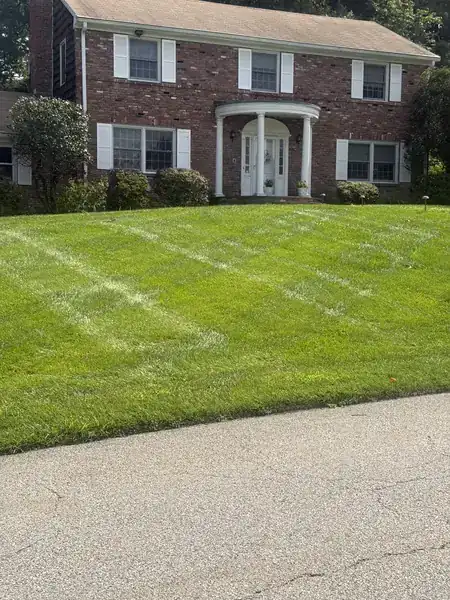
Harrison, Westchester County, NY

Lawn Care & Tick Control in Harrison, NY

Lawn programs and tick barrier treatments for Harrison, Purchase, and West Harrison properties, from half-acre lots to estate grounds.

Scroll
Harrison, Westchester County

Lawn care and tick control built for Harrison yards

Harrison stretches from the compact streets near the Metro-North station up through Purchase, where lots open up and mature oaks and tulip trees shade large lawns. Much of the town sits on heavy clay that holds water in spring and bakes hard by July.

That mix of deep shade, clay, and the wooded buffers around the golf courses and SUNY Purchase campus shapes how we treat a Harrison yard: soil first, shade-tolerant seed where the canopy is thick, and tick barriers where lawns meet the tree line.

Lawn Care

Lawn care in Harrison

Harrison lawns tend to fight two things at once: compaction from clay and thin turf under old-growth shade.

  • Fall core aeration and overseeding with a fine-fescue-heavy blend for shaded Purchase lots.
  • Pre-emergent timing set for the warmer south-county spring, when crabgrass germinates early.
  • Fertilization built around soil tests, since pH runs low under the oak leaf litter common here.
Lawn care services

Tick & Pest Control

Tick and mosquito control in Harrison

Deer move freely between the Westchester Country Club grounds, the campus woods, and residential streets, and they bring deer ticks with them.

  • Barrier treatments along stone walls, wooded edges, and ornamental beds where ticks wait for hosts.
  • Mosquito treatments focused on shaded, damp corners near Silver Lake and the Mamaroneck River.
  • Seasonal programs timed from early spring nymph activity through the fall adult surge.
Tick & pest control services

Where we work in Harrison

Neighborhoods and landmarks on our Harrison route

  • Purchase
  • West Harrison
  • Silver Lake
  • Downtown Harrison
  • Sterling Ridge

Nearby towns we serve

Same crew, same calendar, next town over

All service areas
Harrison FAQs

Questions we hear from Harrison homeowners

Yes. Pricing is by treated square footage, so multi-acre lots in Purchase are quoted after a walk-through. Many owners treat the lawn and the perimeter where the yard meets the woods rather than the whole parcel.

Nymph deer ticks are active by April in most years, and adults stay active into November. A Harrison program usually starts in early spring and runs through fall, with visits every three to four weeks.

Dense oak and maple canopy blocks light and competes for water, and the clay underneath compacts. Aeration in the fall, a shade-tolerant seed blend, and raising the mowing height in those areas make the biggest difference.